After another overnight stop in Alpine where we indulged in good Mexican food, showers, and Finding Dory, we headed north to Guadalupe National Park, home of the highest point in Texas, Guadalupe Peak. The geologic history of the area is fascinating. The Guadalupes were thrust upward from the floor of what is now the Chihuahuan desert, raising the Permian-era Capitan Reef thousands of feet above sea level. The vast limestone Delaware Basin drained, leaving behind a karst topography which caused caves to form, including Carlsbad Caverns. We arrived at the park in the early afternoon and had no problem getting a campsite. We drove a little ways down the road to Frijole Ranch, the first European settlement in the area. The museum seemed to be closed, but we wandered around the ranch, enjoying the shade of spring-watered trees. We shook down our packs after dinner so we could hit the trail before the huge group of University of Georgia students who had arrived at about the same time as us.

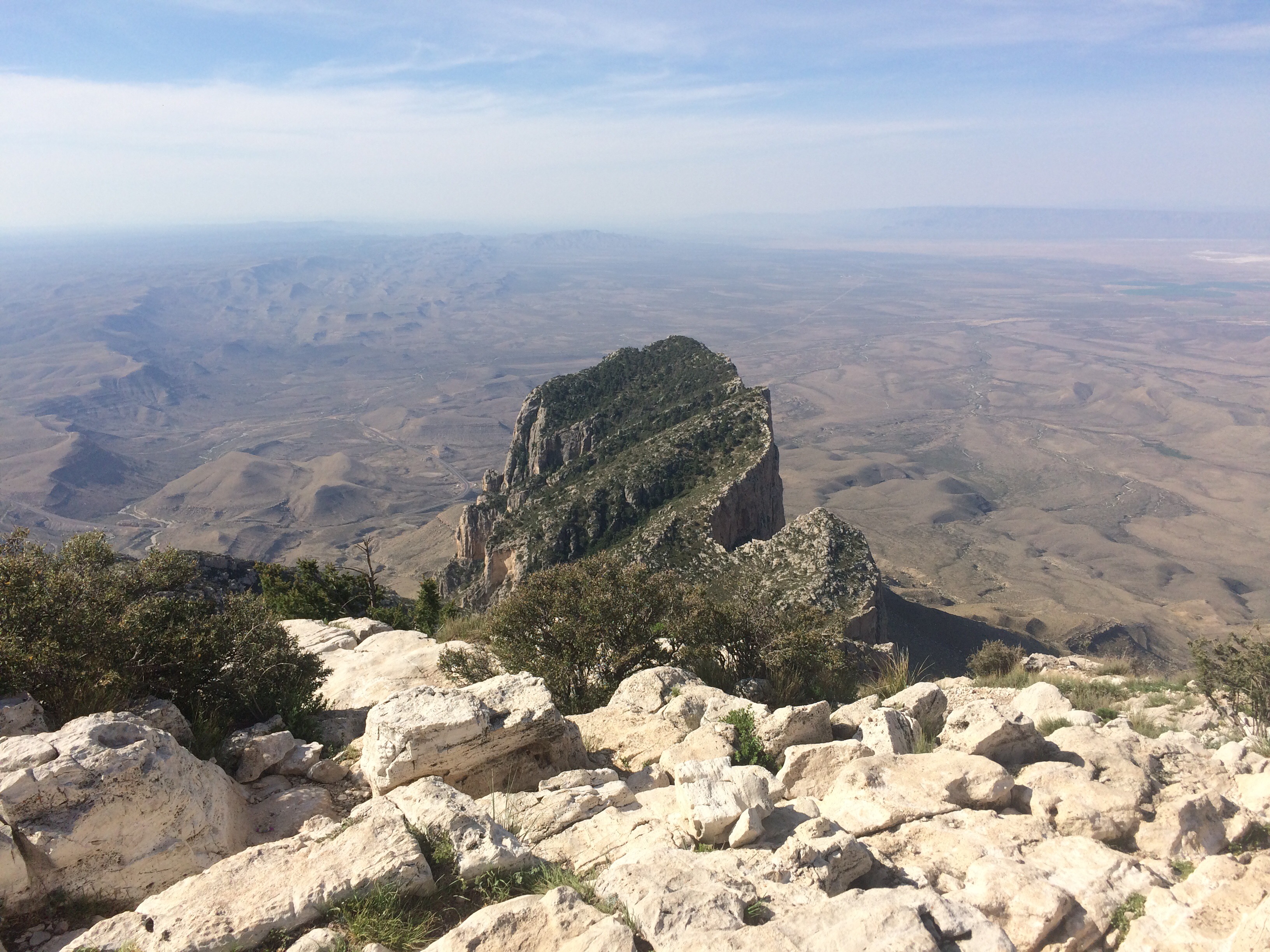
Our plan paid off in spades. We were maybe the second or third group on the trail, and reached the shade on the back side of the mountain before it was too hot. The trail up to Guadalupe Peak is about nine miles round trip, and gains about 3,000 feet to a final elevation of 8,749 feet. The first mile and a half switchbacks up from the desert floor at a punishing angle, but after that it’s much more gradual, and the final ascent involves just a little bit of scrambling on bare rock. The view is fantastic – New Mexico is on one side, the Texan desert on the other. El Capitan, named for the reef, looks exactly like Michigan from above. The descent was somewhat less brutal, though I was still stuck in my Tevas. I wrapped my feet in vet wrap, which was an improvement, but the blisters I already had made for slow going.

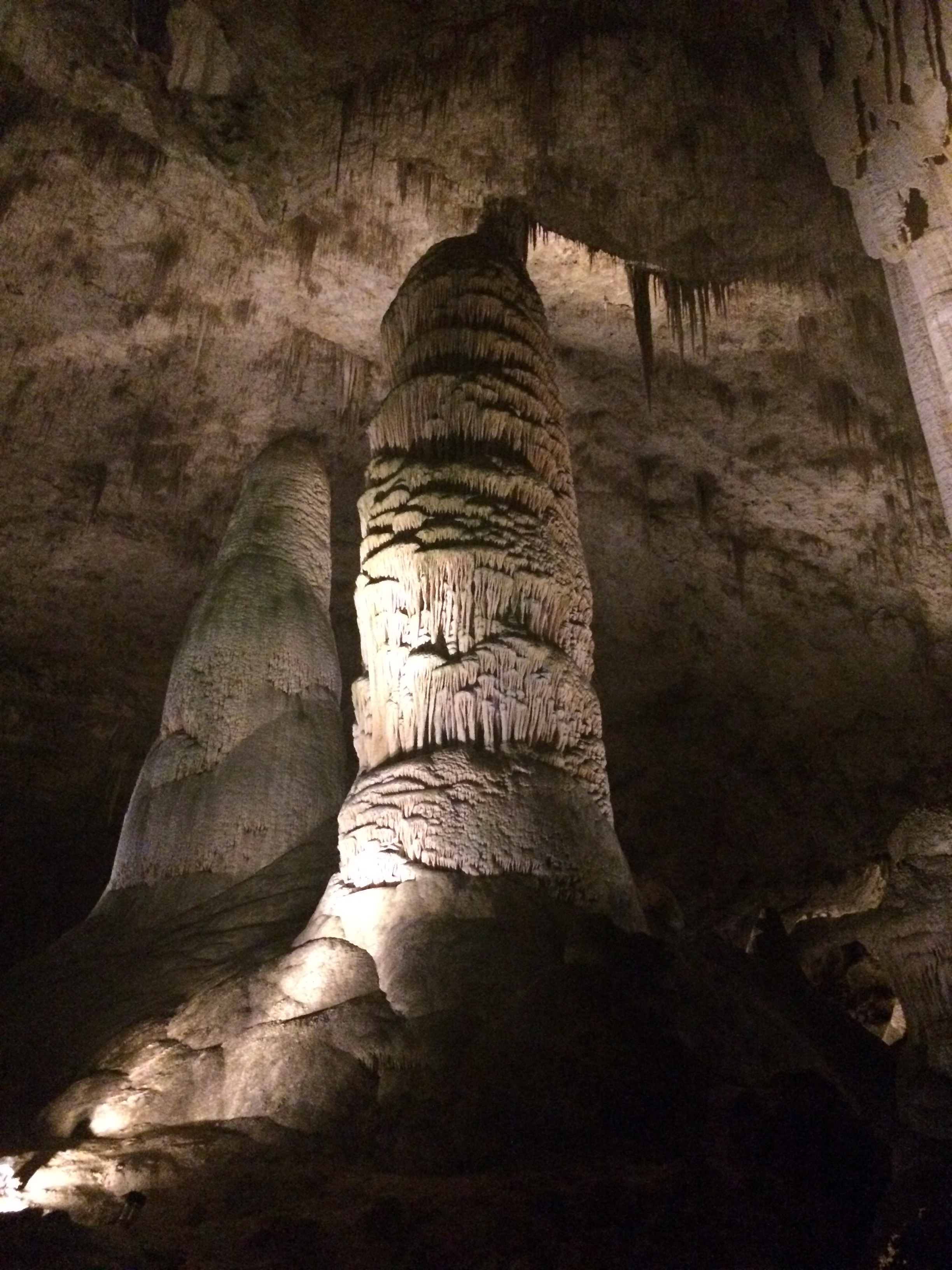
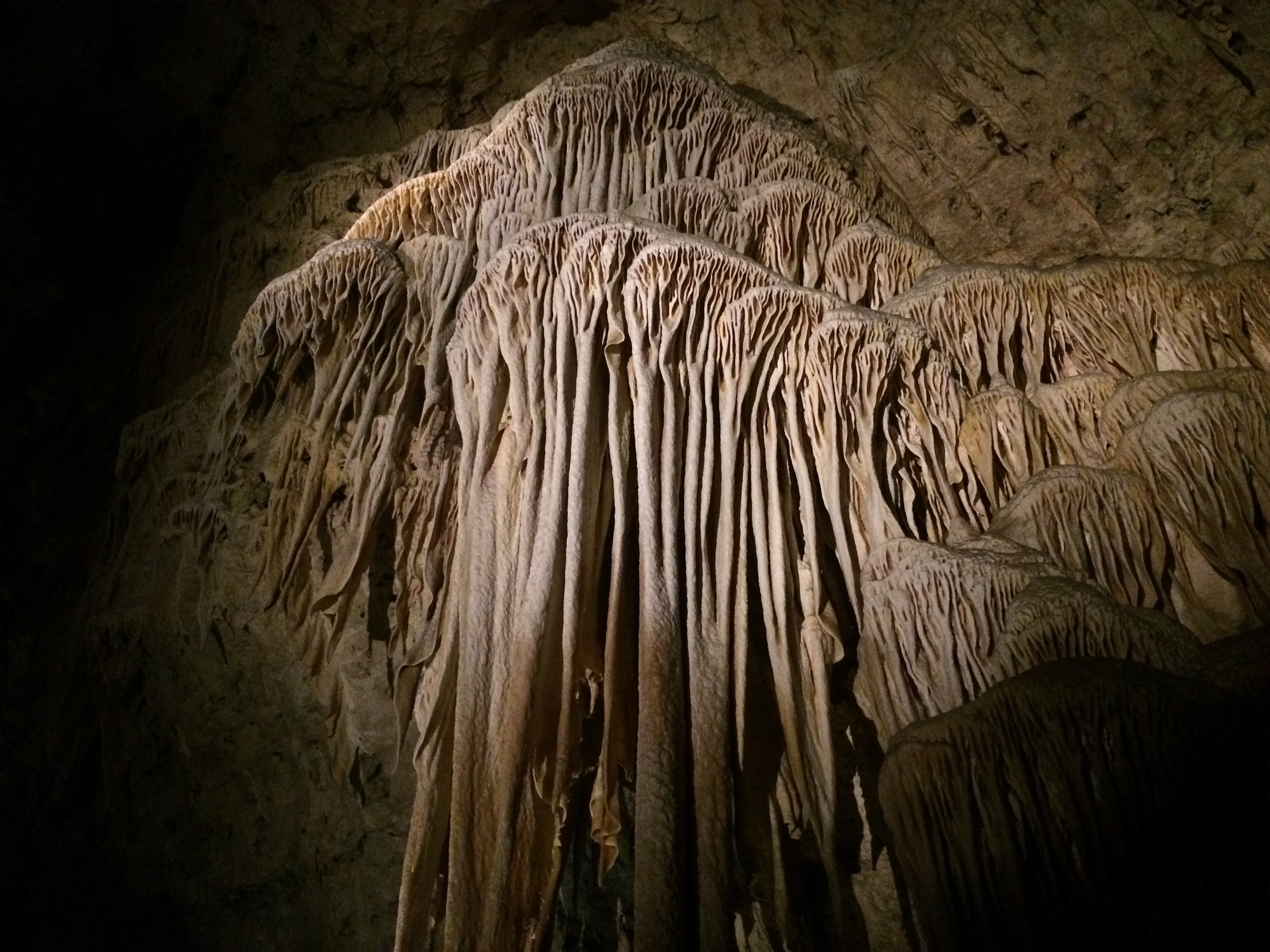
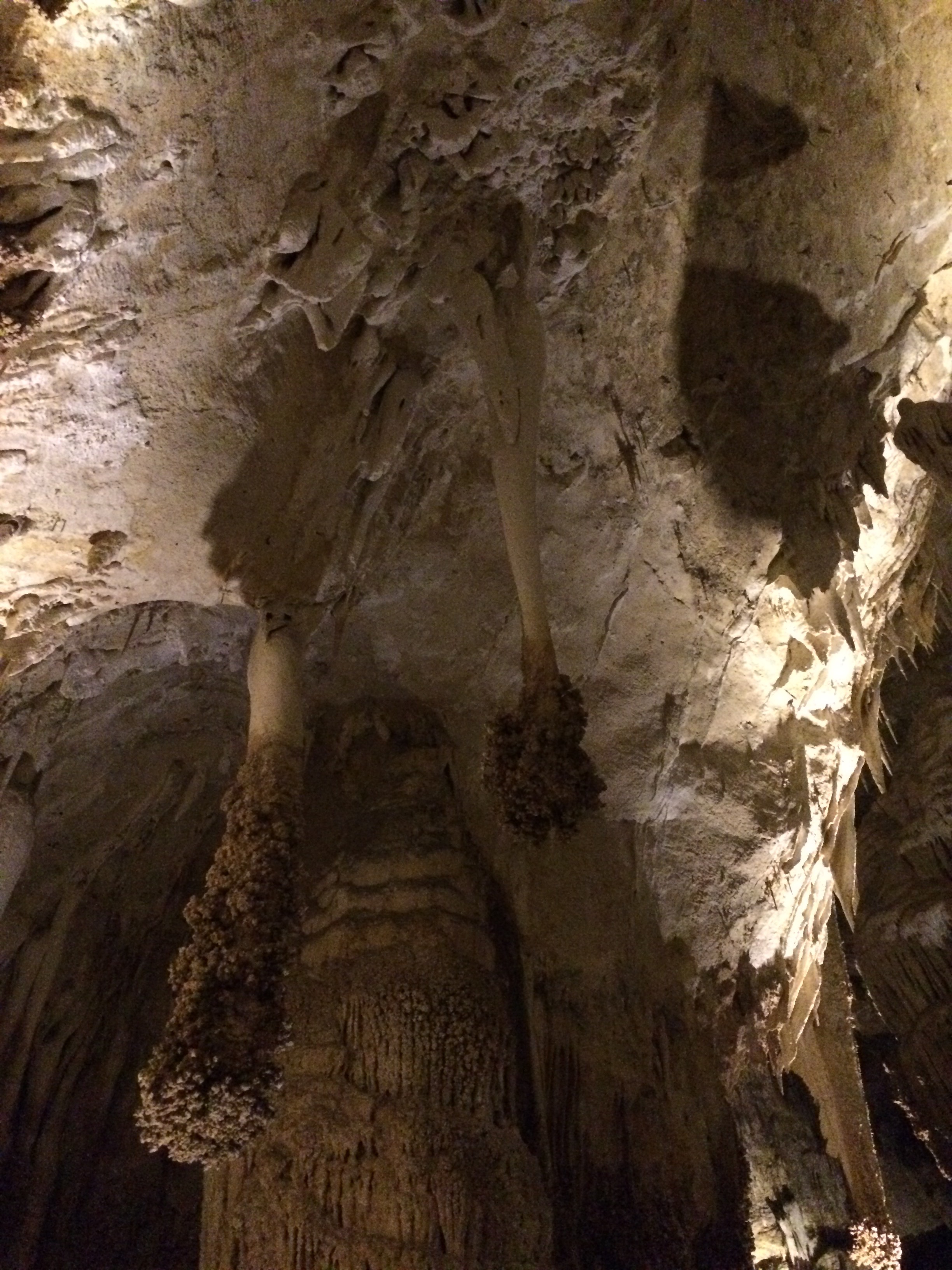
The biggest upside to starting so early was having the whole afternoon left. We decided to drive up to Carlsbad Caverns so Victor could take some pictures. We had tickets for a tour the next morning but it was good to have a chance to hit the highlights of the “Big Room”. After our tour we walked back around the Big Room, coming in from the natural cave entrance, to take pictures of stuff we missed the first time or wanted better pictures of.
Our tour was of the Lower Cave, which isn’t accessible to the general public. It was just a walking tour, no real spelunking, but it was a great tour group, and we got to see some cool formations. There were a ton of cave pearls – formed exactly like pearls in an oyster, as drops of calcite laden water repeatedly turn over a piece of grit – which our ranger said had recently been painstakingly cleaned by volunteers (likely in anticipation of President Obama’s visit for Father’s Day). We also saw a bat preserved in calcite, and signatures of some early visitors to the cave.

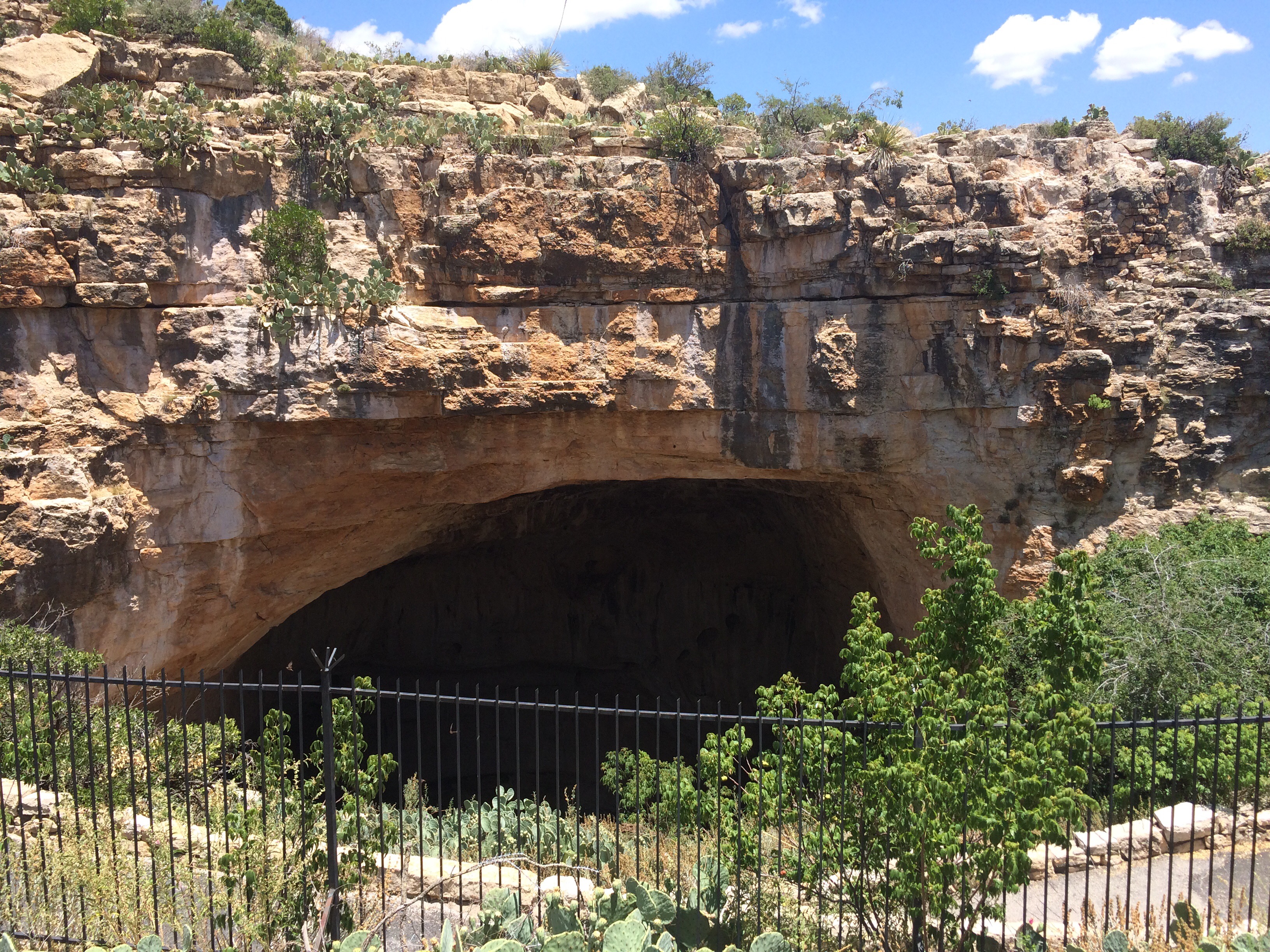
The first white person to discover Carlsbad Caverns was a cowboy, who found the natural entrance thanks to the thousands of bats that stream out of it every evening at dusk. The cave was found to contain several millennia of bat guano, which was mined into the early 20th century. The bats still fly out every night – we watched as between 350,000 and half a million rose up from the mouth of the cave in a tornado of leathery wings frantically flapping before flying off in long columns toward the Strawberry Moon to eat bugs all night. It was an unbelievable sight. If you ever get a chance to go to Carlsbad, don’t miss it. For the sake of the bats’ eyes and ears, absolutely no photography or recording is allowed, but it’s not something I’ll soon forget.
 The Indigents Abroad